
The Surprisingly Smart Strategy Behind Dumb Scams
Over my past 20+ years in sales and customer experience training, I’ve learned that people don’t truly adopt a strategy until they understand why it works.
You can teach someone a process, but unless they understand the behavioral science behind it, the execution usually becomes mechanical, inconsistent, and short-lived. That’s why the training I deliver has always focused as much on the why as the what. When sales advisors and managers understand the psychology driving customer decisions, the strategies stop feeling like instructions and start making sense. The behavior becomes natural rather than forced.
One of the most interesting places to observe behavioral science in action isn’t in a classroom or a business book. It’s in the world of scams.
That may sound like an odd place to begin a discussion about sales strategy, but scammers, as unethical as they are, often understand human behavior remarkably well. In fact, some of the most ridiculous messages circulating today exist for a very deliberate reason.
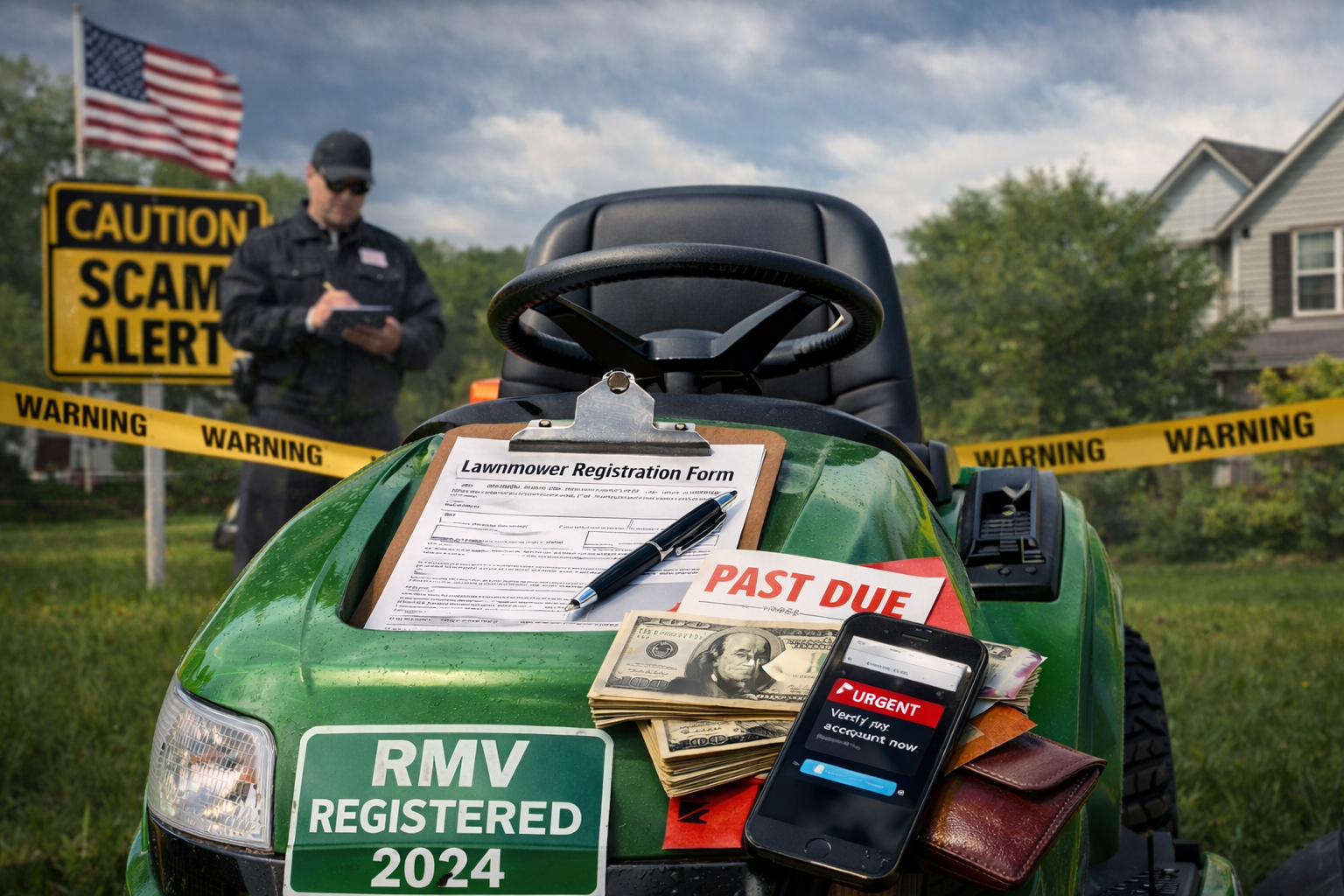
Take the recent text message circulating claiming that residents must register their lawnmowers with the state and pay a $38 annual fee. According to the message, owners would be required to place a weather-resistant sticker on their mower to prove it had been properly registered. Failure to comply, the text warned, could result in fines.
Somewhere out there, apparently, is a Lawn Equipment Enforcement Division preparing to patrol suburban garages.
At first glance, the whole thing seemed too ridiculous to believe. And yet it circulated widely enough that authorities felt the need to publicly debunk it. Which raises an interesting question: why would anyone design a scam that sounds so obviously absurd?
As it turns out, the ridiculousness is often the strategy.
Scammers frequently send messages that appear intentionally dumb because those messages function as a filter. Anyone who reads a text about registering their lawnmower and immediately thinks, “This is nonsense,” deletes it and moves on. Those people were never going to fall for the scam anyway. But the small percentage who respond are exactly the audience the scammer is looking for.
Mass text messaging costs almost nothing. If millions of messages are sent and even a tiny fraction of recipients engage, the scammer has instantly identified the most likely victims. From there, the real scam begins. The first message is not designed to close the deal. It’s designed to find the people who might.
It’s an uncomfortable but effective tactic. And it’s working.
According to the Federal Trade Commission, Americans reported losing about $470 million in 2024 to scams that started with a text message. That figure likely represents only a fraction of the real losses, since many victims never report what happened. Text messaging has become a favorite tool for scammers largely because of its reach. Nearly every text message gets opened, which means scammers can reach enormous audiences with almost no cost.
The “register your lawnmower” outreach fits into a broader pattern of text-based schemes that are costing Americans real money. Several types of messages show up again and again.
One of the most common involves fake package delivery problems. The message claims that a shipment couldn’t be delivered due to an address error or unpaid shipping fee and includes a link to correct the problem. Since nearly everyone has ordered something online recently, the message feels believable. Unfortunately, the link leads to a fake website designed to collect credit card numbers and personal information.
Fraud alert impersonations are another favorite. A text message claims suspicious activity has been detected on the recipient’s bank account and urges them to verify the transaction. Soon afterward, a scammer posing as a bank representative contacts the victim and requests verification codes or account details. Within minutes, access to the victim’s account can be compromised.
Drivers across the country are also seeing a surge in fake toll payment texts. These messages warn that an unpaid toll balance must be settled immediately to avoid additional penalties. A convenient payment link is provided, which of course leads to a fraudulent site designed to collect credit card information.
Perhaps the most psychologically clever scam begins with what appears to be an innocent mistake. The message reads something like, “Hi David, are we still meeting tomorrow?” When the recipient replies that they have the wrong number, the sender apologizes and begins a friendly conversation. Over time the interaction turns into a relationship, often leading to investment advice, cryptocurrency opportunities, or romance scams that can cost victims thousands of dollars.
What’s fascinating about all of this is that scammers understand something many legitimate salespeople overlook. They understand that a message doesn’t have to appeal to everyone to be effective. In fact, the most successful messages often do the opposite. They quickly attract the attention of the small group of people most likely to respond while everyone else ignores it.
In other words, the goal isn’t universal appeal. It’s targeted reaction.
Fortunately, legitimate businesses can apply that same principle without deception. Clear messaging that speaks directly to the right audience will always outperform messaging that tries to appeal to everyone. Customers don’t need absurd claims or scare tactics. They simply need to understand the value being offered and why it matters to them.
Still, the next time you receive a text warning that you must immediately pay a fee to register your lawnmower, remember this: if it sounds ridiculous, that might not be a mistake.
It might be the strategy.









 Pinnacle Performance Champions