Steve Ferrante's High Performance Blog for Sales/Customer Service/Leadership Champs and Progressive Professionals!

Posts tagged ‘Steve Ferrante’

Amazon’s Customer Service and the Curious Case of the 1 Eared Giraffe

Back in May of 2013, I published this article on Amazon’s world-class customer service.

Since then, I’m happy to say I’ve continued putting their team to the test with a steady stream of purchases, and they’ve continued delivering the kind of high-quality care I preach and teach about in my training rooms.

Which brings us to the latest chapter in my Amazon adventures with this curious case of the one-eared giraffe…

Seemingly out of nowhere, my daughter Ava developed an urgent, life-or-death need for animal onesie pajamas. With Christmas around the corner, I tried to steer her toward the “put it under the tree” option. That suggestion was met with agonizing opposition. Evidently, waiting eight weeks for cozy animal sleepwear was a burden no child should be asked to bear.

After reviewing a parade of colorful critters, Ava chose the giraffe as her perfect bedtime companion. So I placed the order.

Here’s the picture from Amazon.com:

Giraffe Onesie PJ's

Most of our Amazon orders show up in two days thanks to Prime shipping, but this particular purchase was coming from a distributor in China, so Prime was out of the question.

Ava, however, was unfazed by logistics. Every day for two straight weeks she asked if “the package” had arrived with the optimism of a kid waiting for Santa. And then, on day fifteen, her long-awaited bundle finally landed on our doorstep.

In what was likely the quickest turnaround of all-time, Ava disappeared momentarily then reappeared in our kitchen like this:

1 Ear Giraffe

Notice anything odd? We didn’t at first either. But a closer look revealed our new giraffe was missing a right ear. If you go back to the product photo, the girl is literally holding the giraffe by the ears. Apparently that quality-control step didn’t make it into the manufacturing process for ours.

Trying to prevent a full emotional collapse (which you probably would’ve heard from wherever you’re reading this), I assured Ava I’d reach out to Amazon and was confident they’d make things right quickly.

Below is the email exchange that followed between me and Amazon’s customer service team.

It all started with my return request:

 Item: Unisex Costume Animal Cosplay Onesie Adult Pajamas Anime Cartoon Sleepwear Medium, Giraffe
> Qty: 1
> Return reason: Defective/Does not work properly
> Customer comments: Arrived with only one ear and appears to have been created
  that way. My daughter is quite upset and doesn't want
  to wait several weeks again for a new one to be delivered

—

Reply received:

Dear customer, we have received your return request. We are so sorry you received
damaged item. You don't need to return the item, you can keep it. We will make a
full refund for you tomorrow. Could you please kindly send us the photo of the
one ear giraffe. We will send it to our QC. Thank you very much.
Please feel to contact us if you have any problem, thanks again.
 Have a nice day.

—

That’s great, I don’t even have to return the item, they’re just going to ‘take care of the customer’ and refund my purchase price. Still, Ava really wants a fully functional giraffe, so I sent the picture I posted above along with this reply:

Thank You for your prompt response and offer to keep item and refund amount paid.
I have attached a pic on the 1 ear giraffe. Will the much anticipated 2 ear version
be sent? My daughter prefers her giraffes to not be hearing impaired...
--

Not long after I received this reply:

Dear customer, thank you for your photo. We will send a new one to you tomorrow.
We will send you the new tracking number later. Thank you very much.
--

As I often say…

This is another great example of customer service recovery done right and why Amazon continues to earn my business and accolades.

Steve

Building Success Momentum

In my training and speaking engagements, I often talk about how success breeds success on both on a business and personal level.

In sales, as an example, high-achievers win more business more often. This success builds confidence, creates momentum and they continue to succeed. It’s no coincidence that so many salespeople are at their best and often succeed immediately after they’ve had a prior successful sales interaction.

On the other hand, failure breeds failure.  As salespeople face rejection on a regular basis, and typically lose far more often than they win, they can lose confidence and momentum, consequently becoming vulnerable to ‘falling in a rut’ and failing for an extended period. 

The same is true of success in any endeavor. 

People who succeed have momentum. The more they succeed, the more they want to succeed, and the more they find a way to succeed. Similarly, when someone is failing, the tendency is to get on a downward spiral that can even become a self-fulfilling prophecy. – Tony Robbins

I believe a key to sustained success is two-fold:

1) Learn from your mistakes and take swift action to correct your course.

2) Capitalize on your wins and maintain your positive momentum.

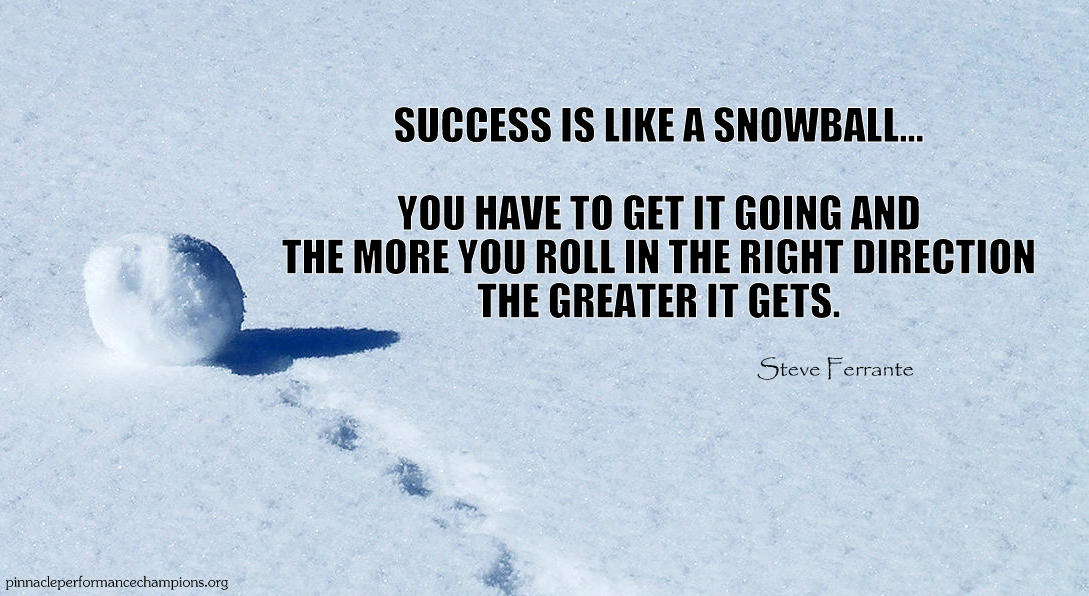
At the end of the day, success is like a snowball.. You have to get it going and the more you roll in the right direction the greater it gets!

Success is like a Snowball

Make a Great Day!

Steve 🙂

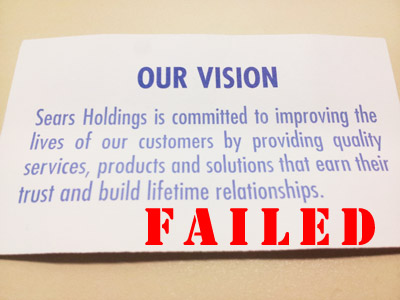
SEARS: A Case Study On How Terrible Customer Service Can Ruin A Brand

sears-customerservice

There was a time when Sears was considered America’s greatest retailer. Sadly, that time has long since passed and today the company is in state of serious distress and, short of a complete overhaul, inevitable collapse.

As I wrote about Radio Shack’s failing back in December, it would be easy to point blame on the changing retail landscape but there are just too many retailers doing well (in the same conditions) to justify that case. 

From my standpoint, and countless thousands of disgruntled past customers, the problem is painfully clear; Sears has long lost its customer focus and anything resembling a customer service culture.

According to Consumer Affairs, an astonishing 86 percent of customers are unsatisfied with Sears’ customer service. That puts them at the bottom of the rankings under their primary competitors Macy’s, JC Penny, and Kohl’s. 

Here’s the Consumer Affairs link to over 1250 bad reviews of Sears Customer Service

Here’s a couple of my recent personal (painful) customer experiences:

How To Lose Friends and Alienate Customers

Incident 1:

On a recent business trip to Indiana, I ripped the seam on my garment bag while attempting to unzip it in my hotel room. Although the timing was terrible for this wardrobe holder malfunction, that bag serviced me well over several years and many thousands of miles of travel. Normally, I would have just ordered a new one on Amazon.com and waited the 2 days for my trusty Prime membership delivery. But, being on the road, and faced with a bag that would no longer close properly, I decided to stop in the Sears in Terra Haute the night before my departure to secure a new one.

The first thing I noticed was how empty the place was. Only a handful of cars out front and only a few people noticeable on my walk through the store to the small luggage section. As I perused the bags for the 8 minutes or so, not one employee was seen but I could hear what sounded like two girls laughing not too far away.

The only customers I could see were in the mattress section directly next to mine, a middle-aged woman pushing an elderly woman in a wheelchair. About 2 minutes after I arrived, the woman asked me “Do you work here?” When I advised I was “just a shopper” she apologized and said, “I can’t find any employees”. A few minutes later I heard her call out to a quickly passing by employee, “Excuse me… do you work here?” The employee, who looked like he was being verbally assaulted, replied “Yes, but I’m leaving now.” “We’ve already been here 15 minutes”, the woman interjected”. “I’ll call someone to help you” he replied, barely breaking stride as he rushed away (I assume for his vehicle). Several more minutes passed and, when nothing materialized, the woman sat on one of the mattresses holding the arm of the wheelchair… “this is crazy Ma, nobody will help us… GUESS THEY DON’T WANT OUR BUSINESS” she just about shouted in a very frustrated tone as she wheeled out of sight. Another one bites the dust.

When I located a suitable garment bag, I made my way towards laughing sounds just around the bend not 15 feet away from where I and the mattress shoppers were. There I found two twenty-something female employees behind a cash register, one standing the other sitting, both on their phones enjoying something far more interesting (to them) then their job.

It was painfully evident that they could care less about any shopper’s experience as the one standing appeared visibly annoyed with the recess interruption as I approached to help fund their paychecks.

Sears Fail

Incident 2:

As a customer service/customer experience consultant, I am always on the look-out for how businesses and their employees perform in these areas. This is especially important when it comes to managing problems because, as I wrote about here, the true test of a business’s customer service fitness is not when things are going right – but rather what is done when things go wrong.

With that in mind, here’s the unedited message I sent to Sears customer service last week:

I’m writing to let you know about the terrible experience and utter disappointment we have had with the Kenmore dishwasher we purchased at Sears nearly 2 years ago. 

The dishwasher never performed as advertised when brand new and internal (plastic) parts broke within months of ownership. I tried to comment on my disappointment back then, but my review was considered “too negative” and was never posted. 

The situation only worsened afterwards…

We have had a professional appliance repairman in twice to replace broken parts and the top rack still hangs down to the point of hitting stacked plates on the bottom preventing proper washing. 

Even after pre-rinsing only 50% of the dishes are ever clean and we’re constantly re-washing everything.  Despite using several recommended products, the washing liquid never dispenses properly and the entire inside door is a constant mess of soap gunk. 

I’m happy to send pics of the inside of the unit along with our should be clean dishes. 

In a nutshell, this is not only the worse dishwasher we’ve ever had but the worst appliance of any kind. 

As we’ve given up investing any more money into this machine and must replace, I’m wondering how Sears will respond to this situation and, at this time, a Very Unhappy Customer? 

Steve

The next day I received this reply:

Dear Steve Ferrante, 

Thank you for contacting Sears. I am sorry to hear that your Dishwasher is not cleaning the dishes completely. After reviewing your account, I have scheduled a service for your Dishwasher on 08/14/15 between 1 PM to 5 PM. The technician will call prior to his arrival.

We value your relationship with Sears. Please feel free to contact us back if you have any further questions through email or calling the below provided number.

Sincerely,

Oggy D.

Realizing the dishwasher was now out of warranty, I must admit at this point I was surprised and impressed that not only did Oggy express proper empathy, but he also took action and, on behalf of Sears, scheduled a service technician to come out and ‘take care’ of the customer (me).

Seeing as this not-scheduled-with-me service was now scheduled for that afternoon, I replied:

Oggy,

Appreciate the scheduling of a technician to assess/service dishwasher but today is not ideal… can  we move to Monday afternoon?

Nothing. No reply. Oggy over and out evidently.

At approximately 3PM, I received a call from the Sears tech who told me he was a half hour away. Apparently unaware of my earlier request to reschedule, I let him know I would be there to meet him.

When the tech arrived, he dug right in to the machine, taking the top rack out… pulling the bottom drain thingy out… spinning the lower spray arm. It sure looked like progress! Then he commented on how the plastic pieces that hold the top rack up were broken and needed to be replaced. Being well aware of this I inquired, “what exactly did Sears tell you?” “What do you mean?” he responded with a bewildered expression on his face.  I let him know that I didn’t request service and that his visit was something Sears scheduled, not me, and that I assumed this was a courtesy call.

The tech was quick to tell me that he wasn’t aware of any of that, I would “have to pay for it”, and that even if I didn’t want the machine fixed there would still be a $75 fee for the visit.

Isn’t that special?

So, I grabbed my iPad and pulled up the email I originally sent to Sears and reviewed with him. I pointed out the “I’m done investing into this machine” part and asked him what he thought. He admitted to being perplexed as to why he was sent but that, as far as he was concerned, this was just another service call.

It really wasn’t the serviceman’s fault, so I called Sears Customer Service and attempted to get Oggy on the line. No can do said the representative, but she could help me. I explained the situation and let her know that I was now standing next to the technician who expects to be paid for a service call I did not ask for or, at this point, want.

She let me know that they don’t schedule courtesy service calls and I would indeed need to pay for the visit. I asked if she had access to my original email and she replied they do not have access to email (evidently still telegraphing in her department). I politely asked to speak with her manager. She let me know that she had “manager responsibilities'” and there was no one else there that could help me. I asked for her name. Maria said she could not provide her full name, instead offering me a 7-digit ID number. I asked if the call was being recorded and, if so, how I could obtain a copy. Maria at first denied then admitted the call may be recorded but there was “no way” I could receive.

Ultimately, Sears turned my request for feedback into a sales call and stuck me with the bill. Adding insult to injury, their customer service representative, in a manner befitting a bill collector, made me feel like I had stolen something from them.

Sadly, Sears has clearly lost its way and sight of its two most important assets: it’s employees and customers. Suffering from a poor corporate culture and no signs of an effective customer service training in place, Sears is left with disengaged employees alienating existing and would-be customers on a daily basis.

At this rate of rapid decline, it likely will not be long before Sears joins the list of once-great failed retailers.

Steve

—

This article is also on LinkedIn > SEARS: A Case Study On How Terrible Customer Service Can Ruin A Brand

Top 3 Rules For Dealing With Naysayers Who Discourage Your Success

No-Nay-Sayers

On your path to success, you will inevitably encounter those negative Ned’s and Nelly’s who will freely offer their opinion as to why you will not be successful. Sadly, these naysayers may even be your friends and relatives. These defeatist types will discourage your success and, if not dealt with effectively, can prevent you from achieving all that you are capable of achieving.

Here’s my Top 3 Rules For Dealing With Naysayers Who Discourage Your Success:

1) Assess Them

Assess The Situation

People who say it cannot be done should not interrupt those who are doing it. 

Often the naysayers simply don’t have all the facts. They haven’t done your due-diligence and put in the time and effort it takes to succeed in your position.

You have done all that, right? Good, you have the upper-hand then and should have supreme confidence in your pursuit to succeed at whatever it is your pursuing.

When someone is discouraging your goal, there’s a couple important questions you should ask yourself of them: 

  1. Is the person successful in the goal that I’m striving to achieve?
  2. Does this person have real experience and expertise in what he/she is advising me on?

If the answers to these two telling questions are “No” then it would most likely be beneficial to not heed their advice. For instance, if your buddy Larry, who’s a plumber (not that there’s anything wrong with that) is discouraging your goal of being the best salesperson at your company well then;

  1. What is Larry’s track record in sales? Has he achieved the type of sales success I’m striving to achieve?
  2. Does Larry have real experience in my role and/or expertise in my profession/business?

If the answers are “No” then Larry is most likely not your best source of guidance, support and inspiration. Instead, ignore the naysayers like Larry and seek the advice of those who are already successful in what your trying to achieve.

2) Protect Your Blocks

Protect Your Blocks

If people are trying to bring you down, it only means that you are above them. 

Remember when you were a preschooler..  or maybe you have one of those little people now? Either way, you or yours probably used building blocks among other tots in some sort of “play group”. If so, then this should sound familiar..

Building blocks.. cool.. what can I build? I know.. a skyscraper.. big and tall and cool.. the biggest best skyscraper in the city!

And so it begins.. you start building.. focused on the goal.. 1 block, 2 blocks, 20, 40.. getting higher.. this is going to be AWESOME! Then bratty Bobby (every play group has one) comes and knocks over your blocks.. dreams demolished.. Game Over.  

Naysayer’s are just like that.  They can’t have you building something brilliant while their blocks are a big disorganized pile of poo.  They’ll look to knock down your blocks and level the playing field as it were.

Don’t let that happen.. Protect Your Blocks! Be selective and share your goals only with those you know to be encouraging and supportive. Share your goals with everyone with ears (or a Facebook account) and you set yourself up for discouragement as you dramatically increase your exposure to the naysayers who would relish the opportunity to knock over your blocks. 

3) Don’t Engage

Some people are like clouds. When they disappear, it’s a brighter day.

One of the worst things you can do is actively engage a naysayer. As I referenced in my previous rule, you invite this when you carelessly share your goals with everybody. 

When you actively engage with a naysayer you actively engage in unproductive behavior.  Given a naysayer’s lack of belief, you may feel the overwhelming urge to set the record straight and make your case as to why you will indeed succeed. Don’t bother.. you’ll end up wasting an awful lot of time and risk shaking your confidence in the process.

Naysayers can always find reasons why your goals won’t work. What you tell (and believe) yourself is all that really matters. You don’t need a naysayers belief or commitment to succeed, you only need your own. So avoid engaging the naysayers, stay focused and keep moving forward towards your goal. 

There will always be naysayers that discourage and won’t join you on your path to success. That’s okay.. they need not come along. You’re going anyway.

Fast Moving Train To Success

Make a Great Day!

Steve 🙂

steveferrante.com

Top 3 Reasons Champions Don’t Have Time To Procrastinate

procrastination_young

If you’re a procrastinator, there’s a really good chance you’ll book-mark this article to read later. That would defeat the purpose, sort of like that book on “how to improve your memory” I can’t seem to find. 

Never leave that till tomorrow which you can do today. – Ben Franklin

It’s been over a couple hundred years since Benjamin Franklin shared that success tip with the world and one would think that’s ample time to catch on with the human race.

The reality is that many (if not most) folks function closer to what Mark Twain later said in his comical paraphrase of Franklin: 

 Never put off till tomorrow, what you can do the day after tomorrow – Mark Twain

Knowing that procrastination is likely the single biggest killer of productivity, why are so many people (perhaps you) plagued by it? There are many reasons and much has been written about them over the years.

Here’s my Top 3 Reasons Champions Don’t Have Time To Procrastinate:

1) Champions Don’t Wait For Success, They Go To It

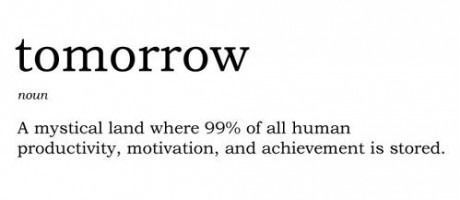
tomorrow-noun

Are you postponing important tasks, waiting until you have more time so you can really focus and get the job done perfectly? After all, who wants to rush in and get a task done poorly now when you can wait and get it accomplished perfectly later?  No doubt later you’ll have more time and energy too. 

Or, if you’re like most people, you won’t. You’ll just take up more valuable time procrastinating and putting off what’s most important to your success. 

A good plan violently executed now is better than a perfect plan executed next week. – George S. Patton

As General Patton pointed out, in warfare it is a strategic advantage to execute a course of action rapidly. Procrastination in action and agonizing over the ‘perfect’ solution can (and often does) lead to a foe gaining the upper hand. So, while you don’t want to make hasty decisions, you also can’t afford to lose ground and risk failure due to your inability to act quickly.

2) Champions Face Challenges Head On

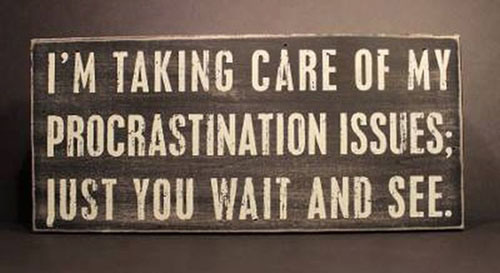
Procrastination Issues

As I wrote in my previous post, high-achievers typically excel at overcoming challenges to reach their goals.

It’s human nature to want to avoid difficulties. When we face difficult tasks, our brains are hard-wired to side-step them, especially when there are so many easier things we could do with that same time. Would you rather write that sales letter or check out the latest funny cat video on YouTube? Without discipline, most folks are easily distracted by such less demanding activities. 

Behavioral psychologist’s refer to this behavior as negative reinforcement. We avoid a difficult task by replacing with an easier one (like that cat video) and we’re rewarded (with entertainment) making us feel better. Ultimately, these types of rewards for avoiding the more difficult tasks reinforces the behavior and we establish a habit of repeating the act over and over, killing our productivity. 

One of my favorite success tips for overcoming procrastination is from Brian Tracy who literally wrote the book on stopping procrastination, Eat That Frog! As described in this short video, the title of the book refers to doing the most difficult task on your to-do list, eating that frog, first so you get it done and avoid the likelihood of procrastinating and avoiding it later. Good stuff!

3) Champions Are 100% Committed

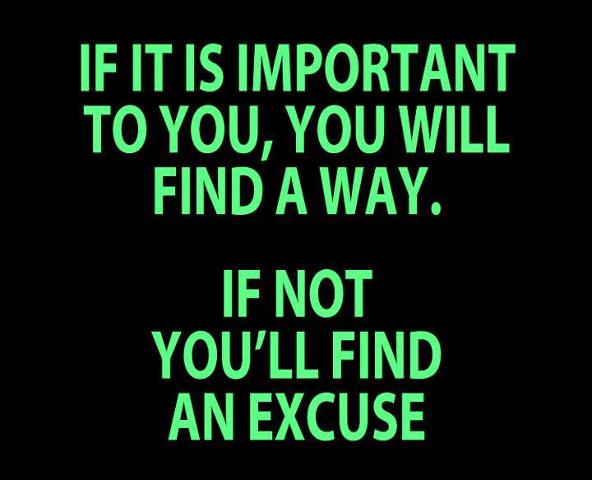
NoExcuses

A popular psychological definition of procrastination is “the gap between intention and action”. When we’re truly committed to something we’re focused and motivated to take action and fill that gap by completing the required tasks in a responsive fashion. When we’re not truly committed, we’re not focused or motivated and it’s easy to get side-tracked find other things to fill the gap.  

As I wrote about in Passion Powers Performance, a big deterrent to performance is a lack of passion and engagement with the work and/or workplace. Very few folks are eager to do anything when they lack enjoyment or fulfillment from doing so. 

Some of this lack of motivation is often attributed to a poor corporate culture where nobody is motivated to do much of anything, fostering procrastination. As Newton’s First Law of Motion states a body at rest will remain at rest until an outside force acts on it. Effective leadership and a ‘winning team culture‘ are tremendous forces to get people motivated and moving and progressing, minimizing procrastination.

Of course, none of this should be a substitute for personal accountability and taking responsibility for your own actions and ultimate success. Whereas weak and average performers typically waste precious time and make excuses, high-achievers maximize their time and create results!

In other words.. Champions Don’t Have Time To Procrastinate!

Champions Don't Have Time To Procrastinate

Make a Great Day!

Steve 🙂

steveferrante.com

This article is on LinkedIn Pulse here > Top 3 Reasons Champions Don’t Have Time To Procrastinate

Eight Great Practices for Creating a Winning Team Corporate Culture

Never Doubt Committed People

You can have the best business plan and build the finest facility but, at the end of the day, none of that matters without a winning team of employees that are committed to the business and its success.

Of course, it helps to hire the right people to begin with – those with a winning personality and mindset that best fit your ‘winning team’ culture. 

Beyond hiring winners, however, creating (and sustaining) a true Winning Team corporate culture is not something that magically appears. It must be cultivated and will flourish or flounder depending on how it is managed.  

To help you with that, here are my great eight practices for creating a Winning Team corporate culture that support world-class sales and customer service objectives:

  • Unengaged Employees Don’t Create Engaged Customers

While this is more of an affirmation than a practice, it’s really important you keep this fact at the forefront of your creating a winning team corporate culture efforts.  If employees are displeased at work you can bet some of that displeasure is spilling over into their customer interactions and, ultimately, costing the business substantial dollars in lost revenue. All of the following practices foster and build employee engagement.

  • Set The Bar

Do you have documented values and best practices that set of standards of performance and state clearly what your organization stands for and what is expected of employees to achieve it? Remember, a goal without a plan is just a wish. Communicating your organizations’ commitment to excellence through values and best practices ensures everyone is on the same page and there is no confusion with your Winning Team Culture mission.

Establishing values and best practices is an integral part of my exclusive training tool-kit/portal program for clients. Visit Your Training Portal for details.

  • Demonstrate Care

A Winning Team Culture can only survive and thrive in a caring and supportive environment. When employees feel like machines, not human beings, they become emotionally detached from the business and tend to go through the motions to get through the day.

To build a winning team culture, managers should always treat their team employees exceedingly well. Do you treat your employees in a manner that is consistent with the way you want them to treat customers? Many managers do not, yet they expect their personnel to excel when it comes to positive customer interactions.

Managers should initiate contact with team members on a regular basis, both formally and informally.  Taking time with employees to show an interest in their work, listening to their issues and experiences demonstrates that you value their contribution and builds morale and motivation.

  • Communicate Well

Can you hear me now? Too often employees don’t feel like they have a true voice in the company, that no one is really listening and their opinion doesn’t matter. Winning Team cultures encourage information sharing and promote an environment of open communication where employees are comfortable contributing their feedback and ideas.

  • Live “Winning Team” Every Day

Creating a winning team culture is not something that happens at the corporate headquarters behind closed doors. It’s in the stores, the service areas, the warehouse, and everywhere else employees interact with customers and each other.

Managers need to be physically (and mentally) present in the workplace to consistently communicate the winning team message with employees, reinforce a commitment to excellence and promote continuous improvement for individuals and the company as a whole. 

  • Be a Champion Cheerleader

Perhaps nothing builds a Winning Team corporate culture better than recognition. It’s amazing what can be achieved when people feel appreciated! Recognition and praise goes a long way towards building positive team spirit and morale. Managers should always seek out opportunities to acknowledge both individual and team efforts and celebrate jobs well done.

Make saying ‘thank you’ a habit and always let employees know when they have performed well. This reinforces and encourages proper behaviors, builds trust and strengthens the culture.

  • Promote Progress

The old adage fits here, “If you’re not growing, you’re dying”.  It’s the same with employees and corporate cultures, they must move forward or they will deteriorate over time. Managers need to make progress a priority and not settle for status quo. Whenever possible, take the opportunity to encourage the next phase of employee and team growth. Engagement and productivity improve when employees know how they are doing now and what they can expect in the future.

  • Have Fun

Okay, I admit it, this is my favorite one. As I discuss in my Pinnacle Performance training, having fun at work is a business strategy. It gets back to practice # 1, unengaged employees don’t create engaged customers. There’s a reason so many market-leading companies are also considered to be the best places to work. They know happiness matters and they create a culture of fun in the workplace that improves employee morale and productivity.

See my YouTube video, Workplace FUN Tips! for some fun inspiration.

Make a Great Day!

Steve 🙂

—

Steve Ferrante is the CEO & Trainer of Champions of Sale Away LLC., providing Pinnacle Performance Sales, Customer Service and Winning Team Culture training, speaking and professional development services to success-driven businesses throughout North America. For more information on Steve and Pinnacle Performance services for your team visit saleawayllc.com

Using a SWOT Analysis to Improve Sales and Customer Service Performance

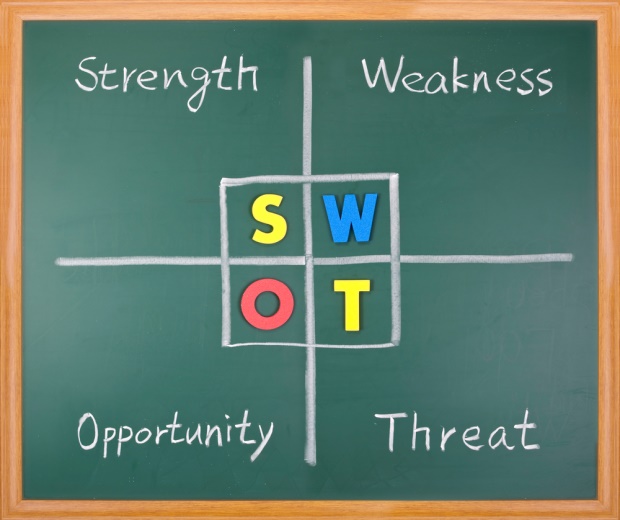
swot-analysis

As I train all my Pinnacle Performance clients, effectively improving an organizations sales and customer service effort should begin with an honest evaluation of the organizations current performance to establish a baseline from which improvements can be addressed.

One of the best ways to to gain a clear understanding of how your organization is currently performing is to conduct a SWOT analysis.

As a strategic-planning management tool, a SWOT analysis evaluates the 4 areas represented by the letters of the name:

S = Strengths
W = Weaknesses
O = Opportunities
T = Threats

Who Should Participate?

Many businesses will only have the senior executives participate in a SWOT analysis process. While that can be worthwhile for an operational analysis, a SWOT that focuses on sales and customer service should absolutely involve all employees that regularly interface with customers. These staff members have first-hand knowledge of the company’s strengths and weaknesses and can provide valuable insight as to what is happening at the critical point-of-sale on a day-to-day basis.

Print

The SWOT analysis process is straight-forward – objectively consider each of those four key areas. In addition, think about what the customer’s perspective might be in each of those areas, and consider how what you do aligns with that outlook.

Strengths:

What sales/customer service strengths exist in your business now?

To help determine this, focus on the perspective of what customers and the market (competitors, the industry) consider as your organizations primary sales/customer service strengths.

In addition, you should determine what competitive differentiators exist? These are areas that your organization is unique (faster, better, more cost-effective) than the competing business’s your potential customers may also shop.

Top strengths typically include:

  • People/Staff
  • Reputation (Longevity in Market)
  • Customer service
  • Product Availability
  • Speedy Service
  • Knowledge of products and services
  • Trustworthy

Customer Perspective:

I am the greatest strength in your organization for without me there is no business to be had.  If you take really good care of me I will help your business thrive and grow. If you don’t, I’ll be more than willing to take my business to one of your competitors that will.  

Weaknesses:

What sales/customer service weaknesses exist in your business now?

It’s critical to be honest in assessing this area. Again, focus should be from the viewpoint of what customers and the market consider as your organizations primary customer service short-comings. These are your competitive disadvantages.

Top weaknesses typically include:

  • Some employees (weak performers)
  • Employee turnover
  • Communication and Phone Skills
  • ‘Winging It’ – lack of professional systems and processes
  • Communication between service and sales teams
  • Too quick to discount to save sale
  • Inconsistency

Customer Perspective:

I can be the greatest weakness in your organization. I prefer to do business with a strong organization and your weaknesses are damaging my confidence.  It only takes one weak performance for me to consider alternatives for my future needs. If I’m merely satisfied by your service, I’ll swiftly depart as soon as I find someone who exceeds them.

Opportunities:

What sales/customer service opportunities exist in your business now?

Opportunities are potential future strengths. What opportunities does your company have to use its strengths to increase sales and market share? How does your strategy address capturing these opportunities?

Top opportunities typically include:

  • Recruiting/Attracting quality employees (replacing weak performers)
  • Training; Improving Sales/Customer Service Skills
  • Exceeding customer expectations
  • Improving corporate culture
  • Institutionalizing processes to create consistency

Customer Perspective:

I can be the greatest opportunity in your organization. I cost far less to keep than it does for you to secure a new customer. But you must truly value me and consistently demonstrate your value to me through your actions. If you’re effective, your opportunity extends beyond just me and I’ll be sure to tell my friends and family how well I’ve been treated. If you fail, I will become one of your competitors opportunities.

Threats:

What sales/customer service threats exist?

Threats are potential future weaknesses. What threats imposed by competitors and/or the market does your organization face? What are the consequences if your customer service effort does not effectively combat these threats?

Top threats typically include:

  • Increased competition (online, national chains, etc.)
  • Poor Customer Service (Wait times, etc.)
  • Losing good employees
  • Losing customers
  • Social Media
  • Complacency

Customer Perspective:

I can be the greatest threat in your organization. I have plenty of alternatives for your products and services. If I feel undervalued, I will leave for somewhere I feel valued. If you’re trying to sell me with your best interest in mind, I’ll take my business to someone who helps me buy with my best interest in mind. If you cannot resolve a concern/problem to my satisfaction not only will you lose my business but I will tell my friends and family not to do business with you.

Action Plan

There’s a popular quote,  a goal without a plan is just a wish. This view certainly applies here and there’s no sense in conducting a SWOT analysis unless you plan to take deliberate action with your findings. Many SWOT analysis end up being nothing more than a bunch of ‘findings’ as the partaking business fails at this last critical step of creating a clear action plan.

The ‘Big Picture’ objectives:

  • Strengths need to be effectively maintained, built upon and maximized.
  • Weaknesses need to be effectively remedied or eliminated.
  • Opportunities need to be effectively prioritized and optimized.
  • Threats need to be effectively countered or minimized.

As a strategic meeting facilitator, I recommend these steps to successfully develop your action plan:

1) Review each area of your SWOT matrix and prioritize your findings into two lists: one that is short-term with issues you plan to address within the next 6 months and one that is longer term of 6 months and beyond.

2) Set the specific actions you will take to achieve the objectives. This will take some brain-storming and strategic thinking and should be the longest part of your planning process. Remember the ‘action’ part of the action plan matters most so don’t rush this step!

3) Attach a time-frame to each of the objectives with ‘benchmark’ dates to check on your progress along the way. Shorter, ’round-table’ meetings should be planned in accordance with these dates.

4) Assign an employee or employees to be in charge of each action area. This is another major reasons SWOT analysis fail; everyone has good intentions but no one ‘owns’ anything so ultimately little gets accomplished.

Follow these steps, and keep the customers perspective in mind at all times,  and you will have a successful action plan to increase your sales and customer service efforts!

Make a Great Day!

Steve 🙂

—

Steve Ferrante is the CEO & Trainer of Champions of Sale Away LLC., providing Pinnacle Performance Sales, Customer Service and Winning Team Culture training, speaking and professional development services to success-driven businesses throughout North America. For more information on Steve and Pinnacle Performance services visit Sale Away LLC. Steve can be reached @ steve@saleawayllc.com

Passion Powers Performance – Do You Really Have It At Work?

People with Passion can Change the World for the Better

Merriam-Webster Dictionary defines passion as “a strong feeling of enthusiasm or excitement for something or about doing something.” 

Do your fellow colleagues have a passion for their work? Mort importantly, do you?

People who study success (conspicuously raising my hand) will tell you that passion and success go hand-in-hand.

It’s no great secret that many folks have little to no passion for their work.  As I wrote about here, these folks have no Zip in their Do Da and typically drag themselves through the day.  They consider work a paycheck and their #1 goal is getting through the week to cash out.

If you aren’t fired with enthusiasm, you’ll be fired with enthusiasm – Vince Lombardi

As the above quote suggests, legendary football coach Vince Lombardi was quite serious about passion and enthusiasm with his players. He knew that passionate, enthusiastic players would have magnetism that would drive each other to give it their best to succeed.

This same contagious ‘magnetic effect’ is also true in the workplace and, properly managed, can power a business to new levels of success.

World-class companies know that passionate, enthusiastic employees are the best kind to hire and retain. They typically work harder and seek to improve themselves and their performance on the job. And, from a sales stand-point, enthusiastic employees naturally have far greater customer engagement than those that are dispassionate on the job.

Sadly, the average business typically has many more unmotivated, unenthusiastic employees. Often poor management is the root cause of the problem with uninspired managers demotivating team members with their disengaging behaviors and lack of on-the-job enthusiasm. However, a poor or weak manager should be no excuse for each employee’s Personal Responsibility In Delivering Excellence.

Test Your Passion

It’s not hard to assess your passion and/or those of your co-workers on the job. Refer back to that opening definition; “a strong feeling of enthusiasm or excitement for something or about doing something.” Is that how you feel about your work?

Passion is all about engagement. Those with true passion are ‘fired up’ for and at their job. They are positive, look forward to their work, have high energy, and their time there seems to fly by.

Those with little to no passion are negative, dread Monday mornings, bring no energy to their work, and their on-the-job time seems to crawl by as they count the minutes until they can run away from it.  

Obviously, one of these folks is far more productive than the other. 

You may be thinking, my work is not special.. I’m only a salesperson, a customer service rep, another worker bee.. what do I have to be passionate about?

How about being the best at what you do?

You may not have a deep-seated personal passion for what your business sells, tires or auto parts as an example, and that’s okay. You should, however, have a passion for your profession and to be the very best you can be in your role.

If you’re a sales or customer service representative, that means having a passion for selling and helping potential customers purchase your product or service, providing the best in customer service and exceeding expectations. 

do-it-with-passion-or-not-at-all-quote

If you don’t have a passion for being the best at what you do where you are currently doing it then you’re probably in the wrong job and positioned for failure or, at best, mediocrity. In other words, if you can’t do your job with passion then you probably shouldn’t do it all. Face the fact that you’ll never achieve the level of success you are capable of achieving without that true passion – you are costing yourself and your business – and move on. 

For, when you follow your passion, success will follow you.

PASSION1

Make a Great Day!

Steve 🙂

This article is also on LinkedIn @ Passion Powers Performance

—

Steve Ferrante is the Grand PooBah & Trainer of Champions of Sale Away LLC. He has a profound passion for delivering his Pinnacle Performance Sales, Customer Service and Winning Team Culture training, speaking and professional development services to success-driven organizations throughout North America. For detailed information visit Sale Away. Steve can be reached directly at 866-721-6086 ext. 701 or via email at steve@saleawayllc.com


Put Some Zip In Your Do Da!

Put Some Zip In Your Do Da

“Put Some Zip In Your Do Da!” is one of my favorite Pinnacle Performance maxims and for good reason…  it is the fuel of high performance!

We all have that daily ‘Do Da’ we do but all too often there’s little zip in it.

The fact is positive attracts positive in all we do. A positive, upbeat attitude typically influences a similar positive response in your customers, co-workers and everyone else you interact with.  Conversely, a negative or poor attitude repels, typically influencing a similar negative response from others.

Pinnacle Performers in sales or customer service demonstrate Zip with their upbeat, friendly tonality never sounding bored or tired.   

Your outward appearance also says a lot about your Do Da. High level politicians up to the President of the United States are coached on body language and how to present themselves to the public because we the people expect leaders to look a certain way.

Leaders (that people want to follow) and successful folks in general are not those that look like they’re carrying a heavy burden and dragging themselves along day after day.

We’ve all seen these sleep-walking Sally’s at work:

Sleep-Walking

To quote Aerosmith, their ‘get up and go must have got up and went’. A sweet emotion interacting with these folks it certainly is not. 

For your selling/customer service/life purposes, recognize that people naturally gravitate towards people who are successful and avoid failure at all costs. Pinnacle Performers project Zip with an energetic pep in their step, good posture and a can-do demeanor that delivers a message of confidence and success. 

Did you see the The LEGO® Movie? I sang “Everything Is Awesome!” for about a month straight and still do whenever it pops into my head. Perfect inspiration to get your Zip going!

Everything Is Awesome

This guy has some serious Zip in his Do Da too:

lateforbusiness

Insert your peppy self here…

Peppy Pete

Here’s a short clip on the topic from a keynote presentation I gave back in 2012:

In a nutshell, you can achieve more and contribute to making work (and the world) a better place with more Zip and less dip in your Do Da!

Sale Away Do Da Logo

Show Your Zip with assorted apparel and unique merchandise available here > Pinnacle Performance Online Store

Make a Great Day!

Steve 🙂

(I don’t just preach Zip for your Do Da, I practice and teach it too)

Tag Cloud