Steve Ferrante's High Performance Blog for Sales/Customer Service/Leadership Champs and Progressive Professionals!

Posts tagged ‘Pinnacle Performance Training’

The Greatness of Ganbaru

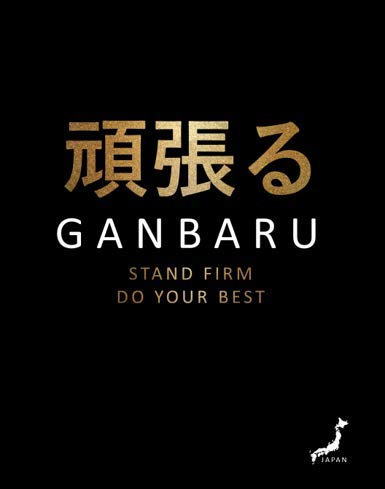
In Japanese culture, there’s a powerful word: Ganbaru (頑張る).

It literally means “stand firm” but in practice, it’s so much more.

Ganbaru is not simply “doing your best.” It’s doing more than your best. It’s persevering and pushing beyond what you thought possible. It’s digging deeper when things get tough and finishing what you start with discipline, focus, and heart.

At Pinnacle Performance Training, we see Ganbaru as synonymous with our own philosophy: a complete commitment to excellence and never settling for less than your very best.

Here are three examples of Japanese businesses that demonstrate the greatness of Ganbaru:

Greatness Through Relentless Craftsmanship: Toyota

Toyota’s success story is built on monozukuri, a philosophy of craftsmanship, innovation, and pride in the process. Ganbaru is reflected in Toyota’s refusal to accept “good enough,” its discipline to continually improve, and its determination to lead through quality and efficiency.

Greatness Through Enduring Resilience: Kongō Gumi

Founded in 578 AD, Kongō Gumi is the world’s oldest documented company, with a 1,400-year history of building and restoring temples. Despite wars, natural disasters, and cultural upheavals, it has stood firm, holding true to its mission for over a millennium.

Greatness Through Sustainable Passion: Monolith Soft

This video game studio, best known for Xenoblade Chronicles, shows a modern spin on Ganbaru. Instead of glorifying burnout, they push creative limits while fostering a healthy work culture that sustains passion and innovation.

Whether in factories, temples, or creative studios, these companies prove that Ganbaru is more than a cultural phrase, it’s a formula for success.

Where in your role today can you bring the spirit – and greatness -of Ganbaru?

Steve

Yesterday’s Home Runs Don’t Win Today’s Games

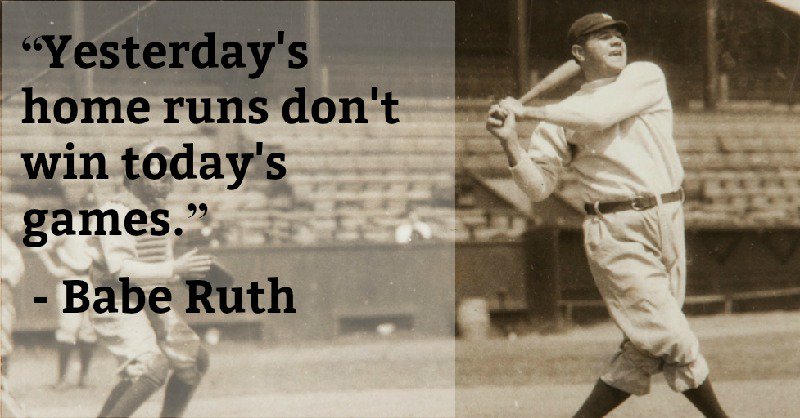
Babe Ruth, one of the greatest players in baseball history, once said:
“Yesterday’s home runs don’t win today’s games.”

It’s a powerful reminder that no matter how impressive your past achievements, today demands new effort, new focus, and new results. Success isn’t permanent… it’s rented, and the rent is due every day.

The Danger of Living on Yesterday’s Wins

In sales, leadership, and business, it’s easy to celebrate the “home runs” we’ve already hit—record sales months, big client wins, or standout performances. But the reality is:

Customers don’t care about yesterday’s results. They care about the experience they receive today.
⭐ Teams don’t stay motivated by old victories. They need fresh leadership and inspiration.
⭐ Markets don’t reward complacency. Competitors are always swinging for their own home runs.

Living off yesterday’s glory creates blind spots. It dulls urgency, lowers standards, and leaves the door wide open for someone else to step up and win.

Every Day is a New Game

The scoreboard resets every morning:

➡️ Sales goals start at zero.
➡️ Service expectations rise with every customer interaction.
➡️ Leaders must show up again with clarity, energy, and commitment.

What you did last month, last week, or even yesterday matters far less than what you choose to do today.

The Pinnacle Mindset

Pinnacle Performers bring their best every day, because consistency is what separates champions from the rest.

✅ A true professional doesn’t just celebrate the win; they prepare for the next one.
✅ A great leader doesn’t just point to past success; they model today’s excellence.
✅ A high-performing team doesn’t just rely on yesterday’s momentum; they create new momentum together.

This is how you build what we call a Winning Team Culture. One where every member understands that success is earned, not inherited, and where today’s performance is the only performance that matters.

Final Word

Babe Ruth was right. Yesterday’s home runs don’t win today’s games. But with the right mindset, discipline, and commitment, today’s effort can set the stage for tomorrow’s victory.

So, here’s the challenge:
Don’t rest on your past wins. Step up, swing hard, and make today count.

Steve


🔥 Ready to raise your game? Contact me directly via steve@pinnacleperformancetraining.biz and let’s talk about how Pinnacle Performance Training can help your team deliver championship-level results, today and every day.

Aim Higher: Why Safe Goals Keep You Stuck


All too often sales teams, leaders, and businesses set safe goals because they don’t want to risk falling short. But safe goals don’t spark growth. They don’t inspire greatness. They keep you where you are—comfortable, but not exceptional.

As Michelangelo warned:

“The greatest danger for most of us is not that our aim is too high and we miss it, but that it is too low and we reach it.”

If you want to separate yourself from the competition, don’t lower the bar—raise it. And then go after it with discipline, commitment, and passion.

Why Safe Goals Hold You Back

Safe goals feel good in the moment because they’re achievable. You get to check the box and sense you succeeded. The problem? Success with a low bar isn’t real growth, it’s maintenance.

Safe goals:

  • Encourage teams to stay in their comfort zone.
  • Keep businesses reactive instead of innovative.
  • Lead to complacency, which is where competitors catch up and pass you.

Nobody ever built a championship team, a thriving business, or a breakthrough innovation by aiming for “good enough.”

The Real Danger of Low Aims

Hitting an easy goal can be more damaging than missing a high one. Why? Because it convinces you that your current level is all you’re capable of.

When you miss a high target, you still stretch yourself. You learn new skills, strengthen discipline, and often discover that you can get closer than you thought. That’s growth.

But hitting a low aim keeps you stagnant. It breeds complacency. And complacency is the silent killer of potential.

What Raising the Bar Looks Like

Raising your aim doesn’t mean chasing unrealistic dreams. It means intentionally setting goals that stretch your team beyond “comfortable.”

It looks like:

  • Stretching beyond comfort: Creating goals that require new strategies, better habits, and sharper skills.
  • Focusing on behaviors, not just outcomes: Sales numbers matter, but the conversations, service, and discipline behind them matter more.
  • Celebrating progress, not perfection: Aiming high guarantees challenges. Success is found in the adjustments, the persistence, and the lessons along the way.

How a Pinnacle Performance Purpose Helps

At Pinnacle Performance Training, we train teams to:

✅ Replace “safe” with “stretch” goals.
✅ Strengthen accountability to follow through.
✅ Turn challenges into opportunities for growth.
✅ Build the confidence to aim high, and the skills to achieve more.

Because when your team raises the bar, they don’t just hit bigger goals. They redefine what’s possible.

Final Thought

The competition isn’t waiting. Comfort zones don’t create champions. If you want your business to stand out, stop aiming low.

Aim higher. Push harder. And watch your team discover just how much more they’re capable of achieving.

Steve

Ready to Raise the Bar? Contact me directly via steve@pinnacleperformancetraining.biz and let’s talk about how we can help your team aim higher, perform better, and win more.

Proving Them Wrong: The Dr. Joyce Story

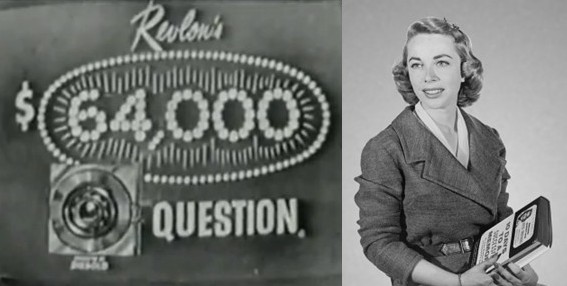
In the 1950s, game shows weren’t just entertainment, they were cultural phenomena. And The $64,000 Question was the ultimate stage. Contestants were expected to be sharp, composed, and above all, brilliant under pressure. But for 28-year-old psychologist, Dr. Joyce Diane Brothers, the challenge was even steeper.

She wasn’t just stepping into the spotlight as a contestant. She was stepping into a world that didn’t expect her to win.

As a woman in a male-dominated arena, she faced skepticism from the start. Whispers of doubt followed her every round. Could she handle the pressure? Did she really know her stuff? The odds were stacked. But Dr. Joyce didn’t flinch.

She studied. She prepared. And when the questions came—one after another—she answered with clarity, grace, and unwavering confidence.

And then she won.

Dr. Joyce Diane Brothers became a household name not just because she conquered a game show, but because she shattered a narrative. She didn’t just take home $64,000—she took down the barrier that said “you can’t” and replaced it with “watch me.”

Pinnacle Perspective

Dr. Joyce’s story is more than history, it’s fuel.

Her victory reminds us what Pinnacle Performance looks like—it’s not just about knowledge or talent. It’s about resilience. Preparation. Belief. It’s about showing up when no one expects you to win and turning doubt into proof.

High-achievers carry that mindset into everything they do. Whether it’s breaking personal records, pushing beyond mental limits, or rewriting what’s possible in your career or craft—Pinnacle is where potential meets power.

Dr. Joyce proved them wrong not by being louder, but by being better. Stronger. Smarter.

This Is Your Moment

Maybe they’ve counted you out. Maybe you’ve been told you’re not ready, not capable, not enough.

Good.

Let that be the spark. Because like Dr. Joyce, you don’t need anyone’s permission to succeed. You just need confidence in your capability, courage to show up, and the determination to follow through. So…

Believe you can. Rewrite the story. Win.

Steve

Gratitude is the Best Attitude!

The occasion of Thanksgiving gives us the opportunity to be thankful for what we have but being grateful should not be limited to the fourth Thursday in November.

From a business perspective, practicing an attitude of gratitude means letting customers know how much you value and appreciate their business.

Since starting Sale Away 19 years ago this month, I have asked thousands of sales and customer service associates in many dozens of businesses all over North America if they appreciate their customers and, predictably, I always receive the same response; “Of course we do!” Then I ask them the real question… How do your customers know?

The sad reality is quite often customers really don’t know or, more importantly, feel appreciated. Often, employees assume customers know they’re appreciated because they regularly thank them at the end of a given interaction. That’s great but true displays of customer appreciation are about much more than a token of “Thanks” at the end of interactions, they are heartfelt and consistent throughout the relationship.

Your customers (and potential customers) should always feel that you genuinely care for their personal well-being. This begins with treating them like human-beings and being grateful, not just because they’re interested in your products or services, but rather for the relationship and opportunity to help them.

Cultivate the habit of being grateful for every good thing that comes to you, and to give thanks continuously. And because all things have contributed to your advancement, you should include all things in your gratitude. ― Ralph Waldo Emerson

Although Thanksgiving is the time of year this sentiment is most talked about and expressed in others, sincere gratitude is not a seasonal affair. Your attitude of gratitude should be practiced year-round for there is much to be thankful for.

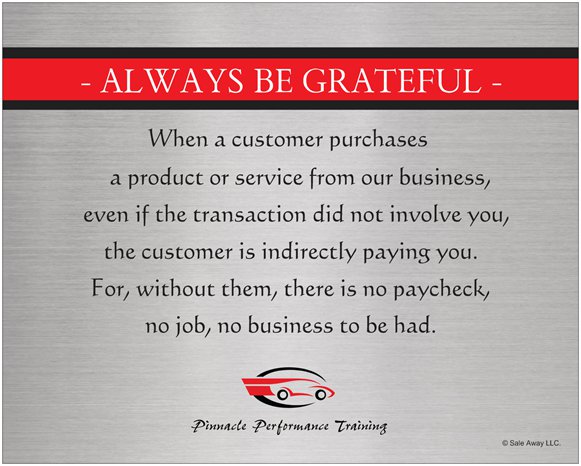
Always keep in mind (and heart) that when a customer purchases a product or service from your business, even if the transaction did not involve you, the customer is indirectly paying you. For, without them, there is no paycheck – no job – no business to be had.

As the title of my Pinnacle Performance Training poster below reads… Always Be Grateful.

Maintain and Attitude of Gratitude

It is human nature that as we settle in over time, we “get used to” everything. When the company, your fellow team members, and customers become part of your daily routine it’s easy to lose the appreciation we had when these ‘good things’ were new to us. 

Of course, we don’t want to lose these things (our job, customers, etc.) to come to our senses and appreciate just how important they are! 

In order to not lose our sense of appreciation as new things become familiar to us, we must live in the moment and maintain an attitude of gratitude. This is easier said (or written about) than done. It takes a conscious effort where we mentally count our blessings and don’t allow ourselves to take the most important ‘good things’ for granted.

On the job, this takes true customer-focus.  You must not become complacent and go through the motions but rather execute with purpose and sincerity.

Of course, it’s not only what you say but what you do that makes the difference. Spontaneous “Thank You for Your Business” cards, follow-up calls to thank customers for their business and ensure they’re happy after the sale, random acts of kindness and consistent acts of exceptional service go a long way towards demonstrating genuine appreciation and gratitude.

Speaking of gratitude, I would be remiss if I didn’t Thank You for making it all the way to the end of this article. I appreciate your time and wish you all the best for success!

Steve

Why Winners Don’t “Rise and Shine”

As a long-standing resident of Planet Earth, no doubt you’re familiar with the expression “Rise and Shine”.

Well I’m here to set the record straight once and for all…

The expression has been bantered about likely as long as folks have been sleeping, a very long time indeed.

In the literal sense, “Rise and Shine” means ‘get your butt out of bed and be lively and energetic’!

So, are most folks doing that? More personally, are YOU doing that? If you’ve been working somewhere you’re not particularly enthused about after you rise then the odds of you ‘shining’ there are quite low.

Sadly, countless companies across the globe are populated by the walking dead… zombie employees dragging themselves through the day. All rise, no shine.

Often, the problem stems from a poor corporate culture lacking effective leadership. More on that here > Eight Great Practices for Creating a Winning Team Corporate Culture

In any event, with regards to high “Pinnacle Performance” achievement, the expression itself is backwards…

One does not merely rise and shine.

A living testament to this, I was rising for years and wasn’t shining much at all. It simply doesn’t work like that.

To truly shine, you must first be excellent at what you do. Once you master your craft you will ‘shine’ and, once you do, you will most certainly rise to higher levels of success.

Like the song says…

When you truly ‘shine’…

Your customers will notice (You’ll improve relationships and increase sales)

Your team will notice (You’ll set the winning example for all)

Your employer will notice (You’ll stand out and position yourself for promotion)

So please… Don’t rise and shine… Shine and Rise!

Steve

Is serving customers exceptionally well a true priority at your business?

Ever buy a good product and get lousy service? I bet you have. When you get poor service at a restaurant, as an example, the food doesn’t taste as good and your view of the business is downgraded.

Much of the problems created by poor customer service can be resolved by hiring people with a good attitude and pleasing personality before you tell them they need both on the job.

All too often employees go thru the motions without their head and heart committed to providing the quality of service that customers fondly remember, rave about, and return because of. Serving customers exceptionally well is not especially important to these disengaged employees.

Beyond hiring and training your customer service staff properly, leadership must constantly promote the proper customer-focused culture and communicate the importance of service excellence as a key driver of the businesses success.

Make a Great Day!

Steve

** For many more Pinnacle Performance Quotes, please visit > Steve’s Pinnacle Performance Quotes

Passion Powers Performance – Does Your Team Have It?

Former Apple CEO, Steve Jobs, said, “People with passion can change the world.” A bold statement for sure, but perhaps you’re not looking to change the world. Perhaps you’re just looking to create a more successful business. Then does passion really matter? In short, yes – and quite a bit at that.

What is passion? According to Merriam-Webster Dictionary, passion is “a strong feeling of enthusiasm or excitement for something or about doing something.”

Do your team members have a passion for their work? More importantly, do you?

Consultants who study high-performance organizations and high achievers (conspicuously raising my hand) will tell you that passion and success go hand-in-hand. It’s no great secret that many folks have little to no passion for their work. They consider their work little more than a paycheck and their No. 1 goal is getting through the week to cash out and receive it.

As the above quote suggests from legendary football coach Vince Lombardi suggests, Mr. Lombardi was quite serious about passion and enthusiasm with his players. He knew that passionate, enthusiastic players would possess the magnetism to drive each other to give it their best to succeed. This same contagious “magnetic effect” is also true in the workplace and, when properly managed, can power your business to new levels of success.

Sadly, the average business typically has many more unmotivated, unenthusiastic employees. Often poor management is the root cause of the problem with uninspired managers demotivating team members with their disengaging behaviors and lack of on-the-job enthusiasm. However, a poor or weak manager should be no excuse for each employee’s personal responsibility in delivering excellence (PRIDE) on the job.

“Put Some Zip In Your Do Da!” is one of my favorite Pinnacle Performance maxims and for good reason… it is the fuel of high performance! We all have that daily “Do Da” we do, but all too often there’s little zip in it.

The fact is that positive attracts positive in all we do. A positive, upbeat attitude typically influences a similar positive response in your customers, co-workers, and everyone else you interact with. Conversely, a negative or poor attitude repels, typically influencing a similar negative response from others.

High achievers in sales or customer service demonstrate zip with their upbeat friendly tonality, never sounding bored or tired. This is especially important on phone interactions where only 30% of communication is what you say (content) and 70% is how you say it (tonality). Simply put, to engage callers (and turn more into customers) you must be engaging.

Your outward appearance also says a lot about your “Do Da.” High level politicians up to the President of the United States are coached on body language and how to present themselves to the public because we the people expect leaders to look a certain way.

Leaders (that people want to follow) and successful folks in general are not those that look like they’re carrying a heavy burden and dragging themselves along day after day. We’ve all seen those sleep-walking Sally’s at work. To quote Aerosmith, their “get up and go must have got up and went.” A sweet emotion interacting with these folks it certainly is not.

For your selling/customer-service/ life purposes, recognize that people naturally gravitate toward people who are successful and conversely avoid failure at all costs. High-achievers project zip with an energetic pep in their step, good posture and a can-do demeanor that delivers a message of confidence and success.

Test Your Passion

It’s not hard to assess your passion and/or those of your co-workers on the job. Refer back to that opening definition: “a strong feeling of enthusiasm or excitement for something or about doing something.” Is that how you feel about your work?

Passion is all about engagement. Those with true passion are “fired up” for and at their job. They are positive, look forward to their work, have high energy, and their time there seems to fly by. Those with little to no passion are negative, dread Monday mornings, bring no energy to their work, and their on-the-job time seems to crawl by as they count the minutes until they can run away from it.

Obviously, one of these folks is far more productive than the other.

It’s not about your products or service…

As I advise my many market-leading clients in the tire/auto service industry, a successful (high-achiever) employee’s passion is rarely, if ever, tires or working in a tire/auto service business for that matter. However, they must have a passion for customer service, a passion to serve, a passion to help others, and above all, a passion to succeed. This applies to any type of business.

You may be thinking, “My work is not special. I’m only a salesperson, a customer service rep, another worker bee. What do I have to be passionate about?”

How About Being the Best at What You Do?

You may not have a deep-seated personal passion for the products and/or services that your business sells, and that’s okay. You should, however, have a passion for your profession and to be the very best you can be in your role.

As a sales or customer service representative, that means having a passion for selling and helping potential customers purchase your products or services, providing the best in customer service and exceeding expectations.

If you don’t have a passion for being the best at what you do where you are currently doing it, then you’re probably in the wrong job and positioned for failure or, at best, mediocrity. In other words, if you can’t do your job with passion then you probably shouldn’t do it all.

Face the fact that you’ll never achieve the level of success you are capable of achieving without true passion – you are costing yourself and your business – and move on. For when you follow your passion, success will follow you.

Steve Ferrante

Gratitude is the Best Attitude!

The occasion of Thanksgiving gives us the opportunity to be thankful for what we have but being grateful should not be limited to the fourth Thursday in November.

From a business perspective, practicing an attitude of gratitude means letting customers know how much you value and appreciate their business.

Since starting Sale Away 13 years ago this month, I have asked literally thousands of sales and customer service associates in many dozens of businesses all over North America if they appreciate their customers and, predictably, I always receive the same response; “Of course we do!” Then I ask them the real question… How do your customers know?

The sad reality is quite often customers really don’t know or, more importantly, feel appreciated. Often, employees assume customers know they’re appreciated because they regularly thank them at the end of a given interaction. That’s great but true displays of customer appreciation are about much more than a token “Thanks” at the end of interactions, they are heartfelt and consistent throughout the relationship.

Your customers (and potential customers) should always feel that you truly care for their personal well-being. This begins with treating them like human-beings and being grateful, not just because they’re interested in your product or service, but rather for the relationship or opportunity to help them.

Cultivate the habit of being grateful for every good thing that comes to you, and to give thanks continuously. And because all things have contributed to your advancement, you should include all things in your gratitude. ― Ralph Waldo Emerson

Although Thanksgiving is the time of year this sentiment is most talked about and expressed in others, true gratitude is not a seasonal affair. Your attitude of gratitude should be practiced year round for there is much to be thankful for.

Always keep in mind (and heart) that when a customer purchases a product or service from your business, even if the transaction did not involve you, the customer is indirectly paying you. For, without them, there is no paycheck – no job – no business to be had.

As the title of my Pinnacle Performance Training poster below reads.. Always Be Grateful.

Maintain and Attitude of Gratitude

It is human nature that as we settle in over time we “get used to” everything. When the company, your fellow team members, and customers become part of your daily routine it’s easy to lose the appreciation we had when these ‘good things’ were new to us. 

Of course, we don’t want to lose these things (our job, customers, etc.) to come to our senses and appreciate just how important they are! 

In order to not lose our sense of appreciation as new things become familiar to us, we must live in the moment and maintain an attitude of gratitude. This is easier said (or written about) than done. It takes a conscious effort where we mentally count our blessings and don’t allow ourselves to take the most important ‘good things’ for granted.

On the job, this takes true customer-focus.  You must not become complacent and go through the motions but rather execute with purpose and sincerity.

Of course, it’s not only what you say but what you do that makes the difference. Spontaneous “Thank You For Your Business” cards, follow-up calls to thank customers for their business and ensure they’re happy after the sale, random acts of kindness and consistent acts of exceptional service go a long way towards demonstrating genuine appreciation and gratitude.

Speaking of gratitude, I would be remiss if I didn’t Thank You for making it all the way to the end of this article. I appreciate your effort and wish you all the best for success!

Steve

Are You The Smartest Sales Person In The Room?

There’s this popular quote, “If you’re the smartest person in the room you’re in the wrong room”. This quote has always struck a nerve with me. More on that shortly. First, a brief (remarkably relevant) story..

About a year or so ago, I was speaking with a business owner who had just decided to hire me to train his sales and service team. His primary reason for hiring me had nothing really to do with anything I had done or said personally, we had never met in person and had only spoken on the phone once. Instead, his reason for hiring me was something another client had said about me to him. “He said you’re crazy smart and had a really positive impact on his whole team”. “Crazy smart”, those were his exact words. Sounds like an oxymoron to me and, besides, being a New Englander with Bostonian DNA, I prefer Wicked Smaaht.

At that time, I didn’t say much of anything other than “great” or similar as we proceeded to formalize our training plans. But that label.. it stuck with me. I knew where it came from but why? In my 12+ years as a trainer, I certainly don’t recall ever referring to myself as “Crazy Smart”. 

So please allow me to set the record straight..

I am far from smart, crazy or otherwise, on most things. So are you and all the people you know. Take carpentry for instance. I have a good friend who’s a fantastic carpenter. The kind of guy that didn’t have an addition built on his house so he could do it. And now it looks at least as good as the house!  By comparison, my smarts on carpentry are right around dummy level.  If I built an addition on your house it would, at best, be an abomination. 

Same goes for chemistry and agricultural. I’m not the best choice to mix your meds or tend to your crops. In fact, there’s a very long list of things that I really have no business in. And that’s the whole point.

Everybody is a Genius. But If You Judge a Fish by Its Ability to Climb a Tree, It Will Live Its Whole Life Believing that It is Stupid. – Albert Einstein

Being an expert at carpentry, chemistry or agricultural would do absolutely nothing to further my chosen profession as a sales/customer service/leadership trainer. Accordingly, I spend exactly no time on furthering my rather limited education on these subjects.

On the other hand, if you want to know about sales, customer service and/or leadership well now we’re talking! Business, customer engagement, human relations, creating a winning corporate culture? I’ll ace that test! After all, I’m a trainer/speaker/consultant on those subjects.

Be The Smartest Person In The Room?

Back to the quote; “If you’re the smartest person in the room you’re in the wrong room”.

What’s wrong with being the smartest person in any room? If you’re the dumbest person in the room, are you now in the right room? Actually, that thought is more aligned with the true meaning of the quote. If you’re the smartest person in the room, then you’re prohibiting your growth as you can’t learn anything (that you don’t already know) to further your development.  That makes sense.

As an example, if you’re the President of the United States, it would not be most advantageous, and potentially dangerous, to be the smartest person in the room. Accordingly, the President has a Cabinet with the Vice President and the heads of 15 executive departments including  Agriculture, Commerce, Defense, Education, Energy, Health and Human Services, and Homeland Security, to name a few. The Cabinet’s role is to advise the President on any subject he may require relating to the duties of each member’s respective office. With that vital appointment, Cabinet members should certainly be the ‘smartest person in the room’ as they are relied upon as the President’s go-to source for expertise in their department. With the health of the country at stake, it makes perfect sense that the ‘smartest’ people are appointed to the President’s cabinet.

The same goes for corporations. Successful CEO’s recognize they can’t do it all and need to hire and surround themselves with the best and brightest people in each department to effectively grow the business. Conversely, many small businesses fail when the CEO takes on too much themselves and/or fails to hire the best people.

However, imagine being sick and not having the smartest doctor in the room treating you? Or a lawyer who’s not sure  what to do about your legal matter until he speaks with a smarter attorney than himself. In both cases, you would want to deal with that smartest person directly. Be that smartest person.

Napoleon’s “Specialized Knowledge”

Successful people, in all callings, never stop acquiring specialized knowledge related to their major purpose, business, or profession. — Napoleon Hill

I wholeheartedly agree with the Napoleon Hill’s principle of “Specialized Knowledge”.  Napoleon asserted that knowledge is not power, it is only potential power. It only becomes power when, and if, it is organized into a definite plan of action, and directed towards a purpose.

In simple terms, if you want to succeed at anything than you don’t need to know everything. Only what is necessary to succeed at your “major purpose” truly matters. 

As I wrote in The Truth about “Born Salesman”, top performers don’t rely on fate/destiny, they decide and commit to being a student of their profession, learning all they can and working to master their craft over time.

So I absolutely agree and totally disagree with the quote, depending on the position it’s based on. If you’re a sales and service professional seeking peak performance (and all the rewards that comes with), you should certainly strive to be ‘the smartest person in the room’, not only an expert in your business/industry/products but also a master at your craft (selling and customer service).

Steve

pinnacleperformancetraining.biz

Tag Cloud